Industrial Module
Warehouse Operations Control Center
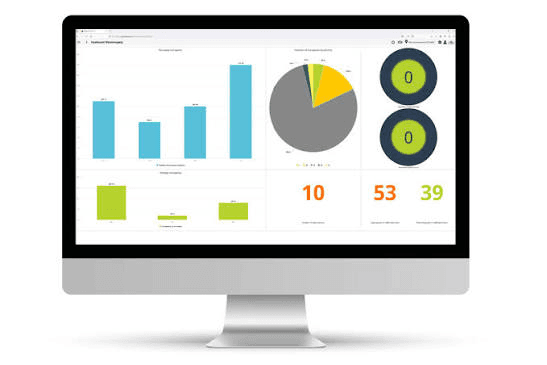
Real-time dashboard of inventory levels, loading bay queues, and SLA alerts.
The Operational Bottleneck
High latency in locating inventory and lagging dispatch status updates.
System Integration & Workflow
Single-pane visual console showing real-time warehouse occupancy, active loading docks, and SLA bottlenecks.
Operational Workflow Blueprint
01. SCAN & REGISTER:Operators capture vehicle details, product serial numbers, or ASN logs instantly via localized scan terminals.
02. DATA VERIFICATION:Stivate custom validation layers inspect and parse the transaction structure, comparing it against target database limits.
03. TRANSACTION QUEUING:Transactions enter an isolated message broker queue that handles database writes safely, preventing ERP database locking.
04. REAL-TIME TELEMETRY:Operational speeds, error counts, and process fulfillment SLAs are output on the manager dashboard control console.
Key Product Capabilities
Real-time bin occupancy heatmaps
Dock activity and trailer loading indicators
Pending dispatch queue orders list
Hourly fulfillment SLA target tracking
Frequently Asked Questions
How does the Stivate Warehouse Operations Control Center integrate with our existing ERP systems like SAP or Tally?
Our Warehouse Operations Control Center integrates via a secure, isolated middleware layer. Instead of executing direct database writes that can lock tables and stall operations, we establish validation staging queues. Transactions are processed and synchronized bi-directionally using official SAP APIs or RESTful webhooks with complete automatic retry logic.
What is the typical timeframe required to build and deploy a custom Warehouse Operations Control Center?
Most custom modules for our Warehouse Operations Control Center are designed, configured, and deployed within 3 to 6 weeks. We roll out in modular phases and run staging sandboxes in parallel to ensure zero downtime or disruption to your daily floor operations.
Who owns the source code and software licenses after the project goes live?
You do. Stivate builds 100% bespoke software. Upon completion, we hand over full repository ownership, database structures, deployment scripts, and code credentials. There are no recurring user license fees, seat limits, or monthly SaaS costs.
How does the system handle scanner devices and custom label printers?
We build direct integrations for Zebra barcode/QR label printers, Honeywell handheld scanners, barcode readers, and mobile tablet terminals. The interface is optimized to remain extremely lightweight, supporting rapid floor scanning operations.
Does the Warehouse Operations Control Center support offline-mode operations during network drops?
Yes. Our applications utilize localized cache indexes. If the warehouse Wi-Fi drops, floor logs and scanning transactions are stored securely on the device, then automatically synced back to the central ERP as soon as connection is re-established.
What security safeguards are implemented to protect our ERP transactions?
We secure all data packets using end-to-end SSL/TLS encryption. Client devices authenticate via secure JWT tokens, and all inputs pass through rigorous database sanitization filters to prevent unauthorized adjustments or query injection.
What post-launch SLA support and maintenance guarantees are included?
We provide a dedicated technical support SLA covering active server telemetry monitoring, automatic database backup schedules, and fast-response patching for any floor workflow blocks.
Can the dashboard metrics and terminology be customized for our operations?
Absolutely. Unlike static SaaS platforms, we write custom code specifically for your floor workflows, ensuring all tables, dashboards, alerts, and report layouts map directly to your exact operational terms and BOM formats.
Expected Outcomes
- 100% layout visibility for warehouse managers
- Optimization of shelf space usage
- 30% faster response times to order anomalies
Need this system?
We custom design this application to fit your specific loading bay parameters and ERP constraints. Let's schedule an audit.